
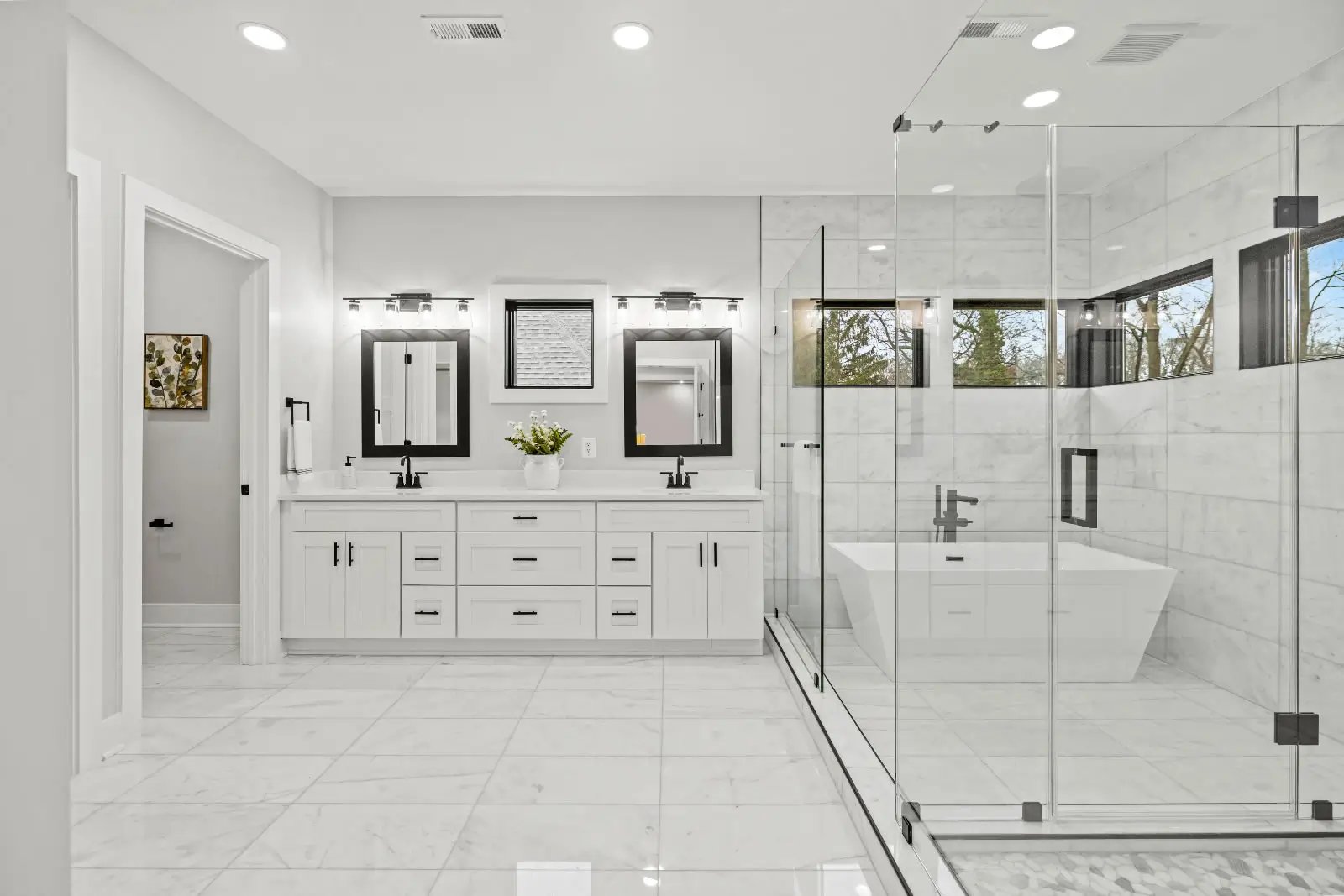
A successful bathroom remodel requires more than picking pretty tiles. Understanding fundamental design principles helps create spaces that look beautiful and function perfectly for years to come.
Layout Fundamentals
The Work Triangle
Like kitchens, bathrooms benefit from efficient layout. Keep frequently used elements—toilet, sink, shower—in logical relationship to each other and the door.Clearance Requirements
Building codes specify minimum clearances:- 15 inches from toilet center to wall/obstacle
- 21 inches in front of toilet
- 30 inches in front of shower entry
- Adequate swing space for doors
- Small powder rooms: 18-24 inches
- Standard bathrooms: 30-36 inches
- Primary bathrooms: 48-72 inches or double vanities
- Comfort height (17-19 inches) vs. standard height
- Elongated vs. round bowl shape
- One-piece vs. two-piece construction
- Water efficiency ratings
- Closed storage for toiletries and medications
- Open display for decorative items
- Towel storage and warming
- Under-sink organization
- Porcelain or ceramic tile
- Natural stone (properly sealed)
- Solid surface materials
- Glass
- Slip-resistant when wet
- Water-resistant or waterproof
- Easy to clean
- Comfortable underfoot
- Mold and mildew growth
- Paint peeling
- Mirror fogging
- Odor issues
Traffic Flow
Consider how you move through the space during morning routines. Avoid layouts where you constantly navigate around obstacles.Fixture Selection
Choosing the Right Vanity
Size your vanity to your space:Toilet Considerations
Shower and Tub Options
Match your fixtures to how you actually use the space. If you never take baths, that soaking tub wastes valuable floor space.Storage Planning
Types of Storage
Plan for multiple storage types:Built-In vs. Furniture
Built-in vanities maximize space, while furniture-style pieces add character. Consider your aesthetic goals and practical needs.Lighting Design
Task Lighting
Vanity lighting should illuminate your face evenly. Side sconces or vertical bars work better than overhead lights alone.Ambient Lighting
Recessed ceiling lights or a central fixture provides general illumination.Accent and Mood
Dimmer switches and decorative lighting add atmosphere for relaxing baths.Material Selection
Wet Area Materials
All bathroom materials should handle moisture, but shower and tub areas need waterproof options:Flooring Choices
Bathroom floors should be:Ventilation
Never underestimate ventilation. Proper exhaust fans prevent:
Americas Best Contractor brings professional bathroom design expertise to every project. Contact us for a consultation.